Understanding the Digital Skills Gap in the AI Forward Construction Workforce: A Data-Driven Study
DOI:
https://doi.org/10.54741/ASEJAR/3.3.2024.180Keywords:
digital skills gap, artificial intelligence, construction workforce, digital transformation, workforce readinessAbstract
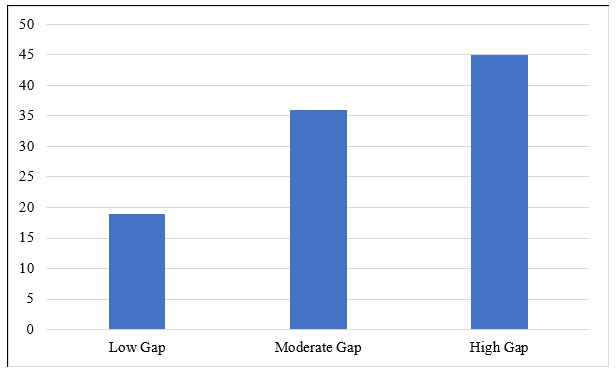
Artificial intelligence (AI), automation, and data-driven technologies are driving a rapid digital change in the construction sector. These developments have the potential to greatly improve decision-making, safety, and productivity, but they also necessitate a workforce with highly skilled digital competencies. This study uses a fictitious, data-driven research framework to investigate the digital skills gap in an AI-forward construction workforce. It is believed that a structured questionnaire given to construction professionals in managerial, technical, and operational responsibilities will gather primary data. To evaluate present digital skill levels and find differences between current competencies and abilities necessary for successful AI adoption, descriptive statistical approaches such as frequency and percentage analysis are used. The results show that a significant section of the workforce has low to moderate digital abilities, and almost half of the respondents believe there is a significant gap in digital skills. These findings highlight the vital necessity of focused training initiatives, ongoing professional development, and organizational tactics meant to improve digital preparedness. By delivering empirical insights on skill mismatches and laying the groundwork for practice and policy interventions in AI-enabled construction environments, the study adds to the expanding conversation on workforce change.
Downloads
References
M. Johnson, R. Jain, P. Brennan-Tonetta, E. Swartz, D. Silver, & J. Paolini, et al. (2021). Impact of big data and artificial intelligence on industry: Developing a workforce roadmap for a data-driven economy. Global Journal of Flexible Systems Management, 22(3), 197–217.
P. Jain, V. Tripathi, R. Malladi, & A. Khang. (2023). Data-driven artificial intelligence (AI) models in workforce development planning. in Designing Workforce Management Systems for Industry 4.0, Boca Raton, FL, USA: CRC Press, pp. 159–176.
A. Vista. (2020). Data-driven identification of skills for the future: 21st-century skills for the 21st-century workforce. SAGE Open, 10(2), 2158244020915904.
N. R. Aljohani, M. A. Aslam, A. O. Khadidos, & S. U. Hassan. (2022). A methodological framework to predict future market needs for sustainable skills management using AI and big data technologies. Applied Sciences, 12(14), 6898.
F. H. Siddiqui, M. J. Thaheem, & A. Abdekhodaee. (2023). A review of the digital skills needed in the construction industry: Towards a taxonomy of skills. Buildings, 13(11), 2711.
D. Afriyie. (2019). Aligning strategic workforce planning with future-of-work trends through advanced performance management and digital HR infrastructure.
P. Tambare, C. Meshram, C. C. Lee, R. J. Ramteke, & A. L. Imoize. (2021). Performance measurement system and quality management in data-driven Industry 4.0: A review. Sensors, 22(1), 224.
Y. Huang, Q. Shi, J. Zuo, F. Pena-Mora, & J. Chen. (2021). Research status and challenges of data-driven construction project management in the big data context. Advances in Civil Engineering, 2021, Article ID 6674980.
L. Hamzat, D. Abiodun, & A. Joseph. (2023). Empowering entrepreneurial growth through data-driven financial literacy, market research, and personalized education tools. World Journal of Advanced Research and Reviews, 19, 1692–1711.
S. Syed, & R. C. R. Nampally. (2021). Empowering users: The role of AI in enhancing self-service BI for data-driven decision making. Educational Administration: Theory and Practice, 27(4), 8105–8115. doi:10.53555/kuey.v27i4.8105.
S. Soltani, D. Maxwell, & A. Rashidi. (2023). The state of Industry 4.0 in the Australian construction industry: An examination of industry and academic points of view. Buildings, 13(9), 2324.
R. Nyathani. (2023). AI in performance management: Redefining performance appraisals in the digital age. Journal of Artificial Intelligence & Cloud Computing, SRC/JAICC-146, 2–5.
G. J. Watson, K. C. Desouza, V. M. Ribiere, & J. Lindič. (2021). Will AI ever sit at the C-suite table? The future of senior leadership. Business Horizons, 64(4), 465–474.
A. Abisoye, & J. I. Akerele. (2021). High-impact data-driven decision-making model for integrating cutting-edge cybersecurity strategies into public policy, governance, and organizational frameworks.
H. E. Lange, P. Drews, & M. Höft. (2021). Realization of data-driven business models in incumbent companies: An exploratory study based on the resource-based view. in Proc. Int. Conf. Information Systems (ICIS).
Downloads
Published
How to Cite
Issue
Section
License
Copyright (c) 2024 Darshit Jasani

This work is licensed under a Creative Commons Attribution 4.0 International License.
Research Articles in 'Applied Science and Engineering Journal for Advanced Research' are Open Access articles published under the Creative Commons CC BY License Creative Commons Attribution 4.0 International License http://creativecommons.org/licenses/by/4.0/. This license allows you to share – copy and redistribute the material in any medium or format. Adapt – remix, transform, and build upon the material for any purpose, even commercially.


