Magnetic Levitation and Superconductors
DOI:
https://doi.org/10.5281/zenodo.18043615Keywords:
coercivity, hysteresis loop, magnetisation, critical current density, diamagnetism responseAbstract
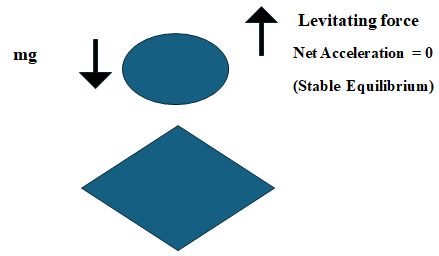
This paper explores how stable magnetic levitation can be achieved using a combination of permanent magnets and superconductors. When these materials interact, magnetic fields create a lifting force due to the Lorentz effect. By designing a proper magnetic field pattern and adjusting the magnetic strength and material hardness, the system can reach a point of stable balance, or equilibrium. This study also dies into the difference between active and passive reputation and their responses affecting levitation stability, The results suggest that with suitable magnetic geometry and alignment, a permanent magnet and a superconductor can produce a reliable levitation effect.
Downloads
References
S. Earnshaw. (1842). Trans. Cambridge Philos., Soc. 7, 98.
T. D. Rossing, & J. R. Hull. (1991). Phys. Teach., 29, 552.
L. C. Davis, & D. F. Wilke. (1971). J. Appl. Phys., 42, 4779.
F. C. Moon. (1994). Superconducting levitation. New York: Wiley.
R. H. Frazier, P. J. Gilinson, Jr., & G.A. Oberbeck. (1974). Magnetic and electric suspensions press. MA: Cambridge.
M. V. Berry, & A. K. Geim. (1997). Eur. J. Phys., 18, 307.
M. Murakami, M. Morita, K. Doi, & K. Miyamoto. (1989). Jpn. J. Appl. Phys., Part 1, 28, 1189.
K. Salama, V. Selvamanickam, L. Gao, & K. Sun. (1989). Appl. Phys. Lett., 54, 2352.
Published
How to Cite
Issue
Section
License
Copyright (c) 2025 Kanishk Rawat

This work is licensed under a Creative Commons Attribution 4.0 International License.
Research Articles in 'Applied Science and Engineering Journal for Advanced Research' are Open Access articles published under the Creative Commons CC BY License Creative Commons Attribution 4.0 International License http://creativecommons.org/licenses/by/4.0/. This license allows you to share – copy and redistribute the material in any medium or format. Adapt – remix, transform, and build upon the material for any purpose, even commercially.


